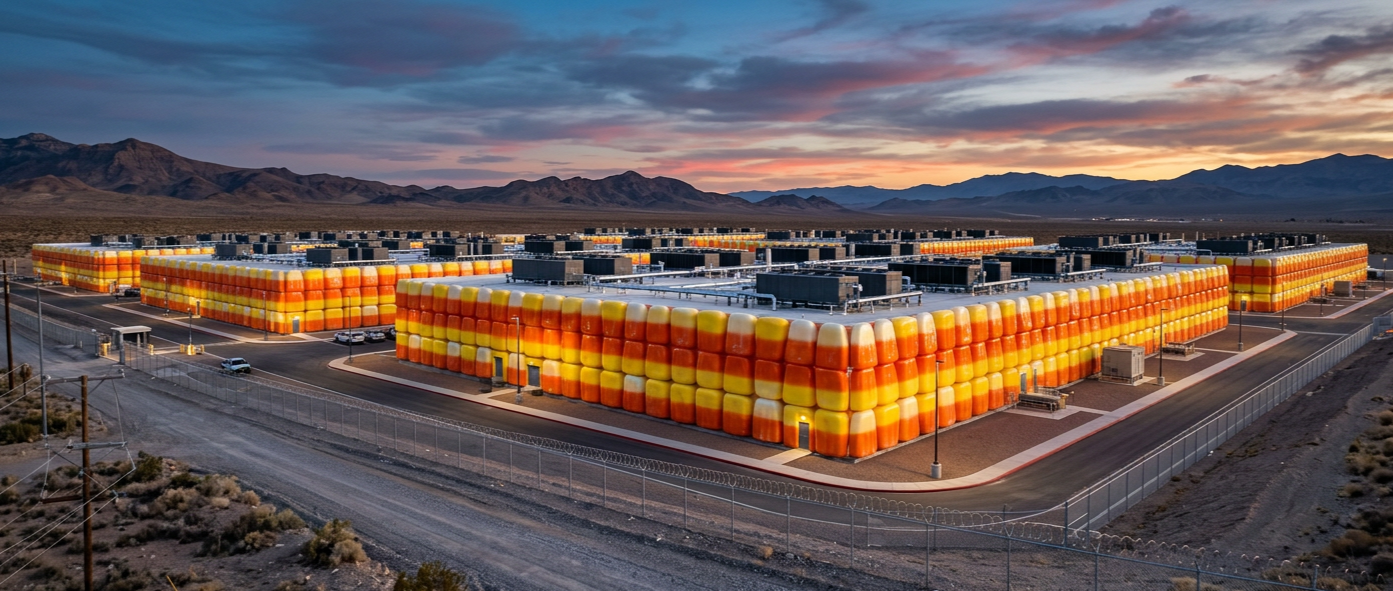
Image created with Adobe Firefly
The AI industry is racing to sell everything, everywhere, all the time. But a 140-year-old candy story points to a better way.
Last week I was listening to The Best One Yet, the daily business podcast from Nick Martell and Jack Crivici-Kramer. Somewhere between Anthropic's IPO filings and the rise of the chief of staff role, they told the story of candy corn and how the company that invented it lost to the company that copied it.
I laughed. Then I couldn't stop thinking about it, because I think candy corn might be the answer to the AI data center fight.
So let's start with the candy
As Nick and Jack tell it, candy corn started in the 1880s at the Wunderle Candy Company in Philadelphia. An employee named George Renninger came up with candy shaped like corn kernels, poured by hand in three colors. (His grandson later said Renninger tested the shape by tossing pieces to the family chickens. When the chickens went after it, he knew he had it right.)
Wunderle had the idea, and Wunderle sold candy corn all year long. But there was no patent. About 20 years later, the Goelitz Confectionery Company copied it.
Here's the twist. Goelitz didn't win by making better candy corn. It won by tying candy corn to Halloween. Wunderle sold it every day. Goelitz made it the candy for one night a year. Today Wunderle is gone, and Goelitz is better known as Jelly Belly.
Nick and Jack's takeaway was simple: "holidays beat all days." The first mover does the hard work of inventing. The second mover often wins by owning the moment.
AI Is Selling Like Wunderle
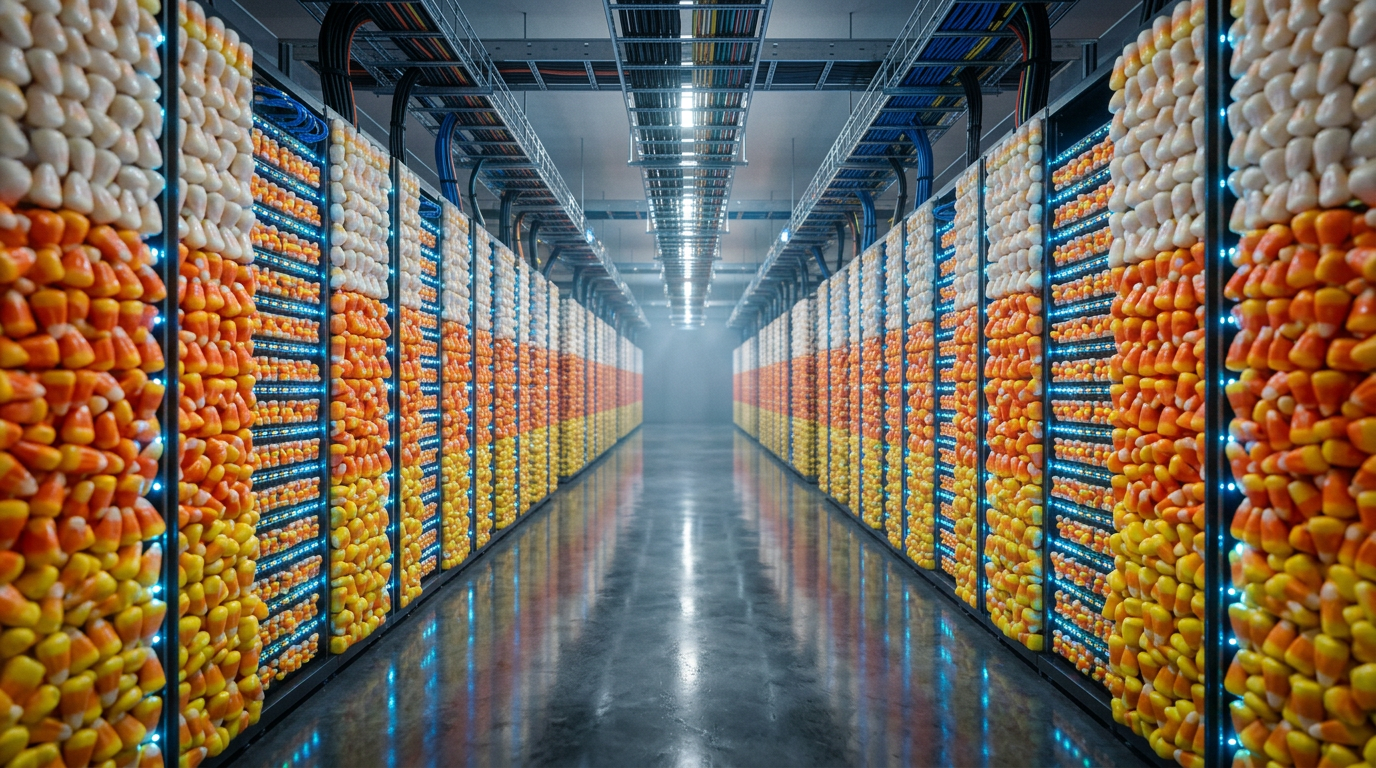
Everything, everywhere, all the time.
Now look at the AI industry. OpenAI, Anthropic, Google, and a half dozen others are racing to give you AI 24 hours a day, 365 days a year, as much as you want, as fast as you want. The scoreboard is volume and speed. Who has the most compute? Who opens the next data center first?
I'm not saying AI isn't valuable. I use it every day. I'm saying the race has started to look like gluttony.
And the public is pushing back. According to Data Center Watch, local opposition blocked or delayed at least 75 data center projects worth about $130 billion in the first quarter of 2026 alone. That's roughly as much as all of 2025. People are worried about their power bills, their water, and the giant buildings going up down the road.
The Rule of Scarcity
This is where behavioral economics comes in. In 1975, Stephen Worchel and his colleagues at the University of Virginia and the University of North Carolina asked people to rate cookies from a jar. Some jars held ten cookies. Others held two. The cookies were identical, yet people rated the ones from the nearly empty jar as more desirable.
That's the rule of scarcity. When something is harder to get, we value it more.
So, apply that to AI. What if the industry built fewer data centers and competed on the quality of each answer instead? Less capacity makes each answer worth more. And when each answer is worth more, AI companies can charge for value instead of volume.
Think of it like this: you don't need a giant data center to remember the name of that actor from a movie you saw 20 years ago. That's a quick, cheap question. But if you're working on a new vaccine, a complex business problem, or a serious piece of creative work, that's heavy lifting. That answer should cost more, because it's worth more.
In other words, price AI by the moment of need, not by the pound.
A Win for Everybody
Here's what I like most. This isn't about making AI companies richer at everyone else's expense.
The companies win because they can charge for what their answers are actually worth. The public wins because fewer data centers means less pressure on the power grid and the water supply. You win because you get better answers when it counts. And we all win because slowing down gives us time to work through the problems of AI, so it serves humanity instead of running over it.
We also don't need ten of everything. Think about your web browser. You probably use one, maybe two. Nobody needs ten to choose from. I feel the same way about AI. Most of us don't need ten large language models (LLMs) when two or three good ones will do. The market will decide how many survive, and I think the winners will be the ones selling quality, not quantity.
A Fair Counterpoint
That said, scarcity has a weak spot. If the big players hold back, someone else will happily flood the market with cheap AI. Probably China. Chinese labs already give powerful models away for free. But a free answer and a valuable answer aren’t the same thing.
Remember, though, Wunderle had candy corn on the shelf every day of the year. Goelitz still took over the category. Being everywhere isn't the same as being valued.
Back to the Copier
Wunderle had the idea. Goelitz had the moment. And the moment won.
Right now, the AI companies are acting like Wunderle. They can keep pouring kernels into the bowl for anyone who walks by, every day of the year, or they can make every kernel worth reaching for.
I know which company I'd rather be. And I'd rather live in the world with fewer data centers, too.